Sardinian sweets have something that goes beyond taste. They’re not just delicious: they’re symbolic, patient, often tied to a gesture—whether it’s a visit, a celebration, or a thank you. In Sardinia, traditional pastry-making isn’t about impressing with excess, but about storytelling: simple ingredients worked with care, shapes that speak of home, aromas that instantly bring you back to a well-set table, even when the celebration is small.
And that’s exactly why they’re perfect as gifts. Sardinian sweets chosen with care are an elegant, authentic offering, never ordinary. In this guide, you’ll find a clear way to navigate: which classics work best, how to choose based on the occasion (Christmas, Easter, other events), which details make the difference in a gift, and how to avoid the most common mistake—buying something nice, but not quite right for the recipient.
Sardinian Sweets: Why They’re a Gift That Never Gets Old
There are gifts that go out of style. Traditional sweets, when done right, never do: because they don’t chase trends, they chase memory. A Sardinian sweet has a rare quality: it’s convivial yet intimate. You can offer it at the end of a meal, bring it to a dinner, give it as a thoughtful gesture. And in every case, it does something important: it creates a moment.
A well-chosen sweet communicates:
- care (because it’s not a random purchase)
- respect (because it’s a proper gift, not showy)
- roots (because it tells a real tradition)
When you want to give a gift that’s simple, yet beautiful, Sardinian sweets are an almost perfect choice: they have identity and remain approachable.
How to Choose the Right Sweet: First the Person, Then the Occasion
It seems obvious, but it’s the point that avoids most mistakes. Before choosing, ask yourself:
- does the recipient prefer soft or dry sweets?
- do they prefer delicate flavors or more intense ones (honey, almond, citrus)?
- will they eat it with family, bring it to the table, save it for a special moment?
Then comes the occasion. Christmas and Easter have strong imagery: the sweet needs to fit within that celebration. A birthday or a thank you, on the other hand, require less ritual and more precision about the person.
The right choice isn’t the most expensive one: it’s the one that seems thoughtful.
The Classics That Always Work, When You Want to Play It Safe
Every tradition has its classics that never disappoint. Not because they’re generic, but because they’re versatile: they appeal to many, fit well at the table, and hold up well as gifts.
In Sardinia, the sweets best suited as safe gifts often have these characteristics:
- balanced sweetness, never excessive
- recognizable ingredients (almonds, honey, citrus, semolina)
- a structure that keeps well (also useful for shipping and long-distance gifts)
- carefully curated presentation, almost like a jewel
When in doubt, it’s better to choose a quality classic than a sweet that’s too unusual. The gift should be an invitation, not a challenge.
Sardinian Sweets and Christmas: What to Choose for an Elegant Gift
At Christmas, the sweet isn’t a detail: it’s part of the celebration. The Christmas gift, in fact, needs to have a specific tone: warm, convivial, often a bit richer. Here, sweets that work well after a meal and pair with coffee, liqueurs, or a glass of dessert wine are ideal.
A Sardinian Christmas sweet, well chosen, is perfect for:
- families (because it’s shared and creates a table moment)
- clients or thank-you gifts (because it’s elegant and not intrusive)
- friends (because it’s festive without being too demanding)
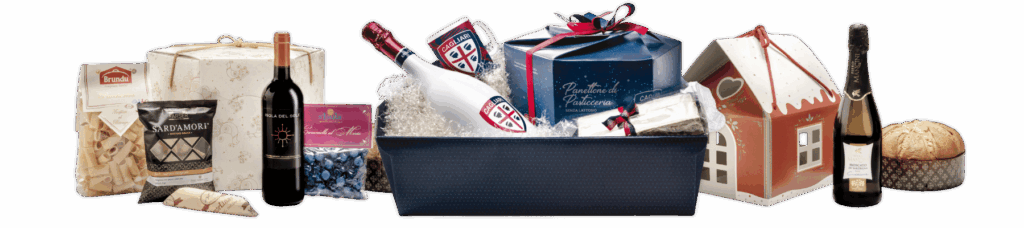
If you want to build a more complete gift, the sweet can become the emotional element of a basket: the one that closes the experience and makes it truly festive.
If you like the idea of a complete gift, discover S’Isula gift baskets: many compositions work because they combine table flavors with a carefully curated sweet finish.
Sardinian Sweets and Easter: Symbols, Light, and Delicacy
Easter has a different language: brighter, more spring-like. Even when the sweets are important, they tend to be more airy in the way they’re experienced: they’re given as a gesture, brought to lunch, shared naturally.
In Sardinia, Easter is often tied to shapes and preparations that speak of ritual. Here, more than richness, what matters is the feeling of tradition: a sweet that seems to belong to that day, and not just any celebration.
A simple tip: at Easter, a gift that combines sweetness and delicacy works well. If the recipient loves strong flavors, you can balance with a cleaner sweet, not too heavy.
Other Events: Birthdays, Thank-Yous, Visits, Corporate Gifts
Outside of major holidays, choosing Sardinian sweets as gifts is almost easier, because you don’t have to respect the ritual of the celebration, but can focus on the person.
Birthday
Here, a sweet with character works, but not one too tied to a specific occasion. It’s better to choose something elegant, perhaps in carefully curated packaging, that seems like a thoughtful gift and not a fallback.
Thank You
A thank-you is a measured gesture: it shouldn’t be excessive, but it should be beautiful. A traditional sweet is perfect because it’s a credible offering.
Visit to Someone’s Home
The sweet is the most appropriate gift: it enters into conviviality without being intrusive. The best choice is a sweet that can be put on the table right away, without instructions.
Corporate Gift
Here, presentation, perceived quality, and versatility matter. A well-packaged Sardinian sweet communicates attention without being too personal. And it can become the heart of a larger package.
How to Tell If a Sweet Is Gift-Worthy
A sweet meant as a gift needs to do three things well: please, keep, present.
- Please: balance, not excess. A sweet that’s too sweet is divisive.
- Keep: in a gift, it matters that it arrives perfect and stays fresh.
- Present: clean, tidy, coherent packaging.
And then there’s a detail that’s often underestimated: the dignity of the gesture. A traditional sweet, if chosen well, is an elegant gift even without grand words. It’s a gift that speaks for itself.
Even a good sweet, however, can become the wrong gift if you don’t consider the context. Here’s a list of common mistakes that diminish the value of the gift:
Choosing a sweet that’s too unusual without knowing preferences
If you don’t know what they like, a balanced classic is better.
Confusing artisanal with heavy
Artisanal can be delicate, elegant, clean. It doesn’t have to be rich.
Neglecting the presentation
Messy packaging ruins the effect. In a gift, appearance is part of the experience.
Giving a sweet out of season
Christmas calls for a Christmas tone, Easter for an Easter tone. It’s not rigid, but coherence is felt.
Sardinian Sweets and Packaging: When It Makes Sense to Choose a Complete Gift
Sometimes the sweet alone is enough. Other times, especially for celebrations or important gifts, a sweet becomes perfect when included in a broader selection: a complete story. A table moment, a savory taste, a sweet final note.
It’s an elegant way to gift Sardinia authentically, without the recipient having to figure out what to do: they open it and experience the gift.
If you want a ready, coherent solution, discover the seasonal packages or discover S’Isula gift baskets.
Conclusion
Sardinian sweets are among the most elegant gifts you can give: authentic, symbolic, capable of creating a moment without needing excess. Whether it’s Christmas, Easter, or a thank-you, the best choice is always the one that’s coherent with the person and the occasion—a sweet that seems thoughtful, not chosen in haste.
If you want to build a complete gift, discover S’Isula gift baskets and explore the selection of typical Sardinian products. And if you’re looking for ready-made options for the holidays, discover the seasonal packages: because a good sweet, when it arrives at the right time, is worth twice as much.